The Philippines has accused China of causing injuries to Filipino fishermen and damaging their vessels during recent encounters in the disputed South China Sea. The incidents, which reportedly involved water cannon attacks and dangerous maneuvers, occurred near Scarborough Shoal and other contested features, escalating long-standing maritime tensions between the two nations.
Background
The South China Sea is a complex geopolitical flashpoint, with multiple nations asserting overlapping claims over its rich fishing grounds, vital shipping lanes, and potential hydrocarbon reserves. China claims sovereignty over vast swathes of the sea, demarcated by its "nine-dash line," a claim largely rejected by the international community.
The Philippines, Vietnam, Malaysia, Brunei, and Taiwan also hold competing claims, primarily within their respective exclusive economic zones (EEZs) as defined by the United Nations Convention on the Law of the Sea (UNCLOS). The Philippines asserts its rights over features like Scarborough Shoal (Bajo de Masinloc) and Second Thomas Shoal (Ayungin Shoal), which fall within its 200-nautical-mile EEZ.
A pivotal moment in the dispute occurred in July 2016 when the Permanent Court of Arbitration in The Hague ruled comprehensively in favor of the Philippines, invalidating China's expansive "nine-dash line" claims and affirming the Philippines' sovereign rights in areas like Scarborough Shoal and Second Thomas Shoal. China, however, rejected the ruling, calling it "null and void" and refusing to recognize its legitimacy.
Since the 2016 ruling, confrontations have continued, particularly around Scarborough Shoal, which China effectively seized in 2012, preventing Filipino fishermen from accessing their traditional fishing grounds. More recently, the Second Thomas Shoal, where the Philippines maintains a small military outpost on the grounded BRP Sierra Madre, has become a frequent flashpoint. China regularly deploys coast guard vessels and maritime militia to block Philippine resupply missions to the outpost, often employing water cannons and dangerous maneuvers, leading to collisions and damage.
These incidents are part of a broader pattern of assertive Chinese actions, including the construction of artificial islands, militarization of features, and harassment of vessels from other claimant states. The United States, a treaty ally of the Philippines, has consistently reiterated its commitment under the Mutual Defense Treaty, warning that an armed attack on Philippine public vessels, aircraft, or armed forces – including those of its Coast Guard – anywhere in the South China Sea would invoke its defense obligations. This commitment adds a significant layer of international dimension to the bilateral dispute.
Key Developments
The latest series of incidents, reported by the Philippine government, underscore a perceived intensification of Chinese assertiveness in the contested waters. On [Specific Date if available, otherwise use "recent weeks"], the Philippine Coast Guard (PCG) and local fishermen reported multiple encounters that resulted in injuries and property damage.
One significant event involved a group of Filipino fishing boats operating near Scarborough Shoal. According to detailed accounts from the Philippine Department of Foreign Affairs (DFA) and affected fishermen, several Chinese Coast Guard (CCG) vessels and accompanying maritime militia ships reportedly engaged in aggressive tactics. These included dangerously close maneuvers, blocking the path of Filipino vessels, and the deployment of high-pressure water cannons.
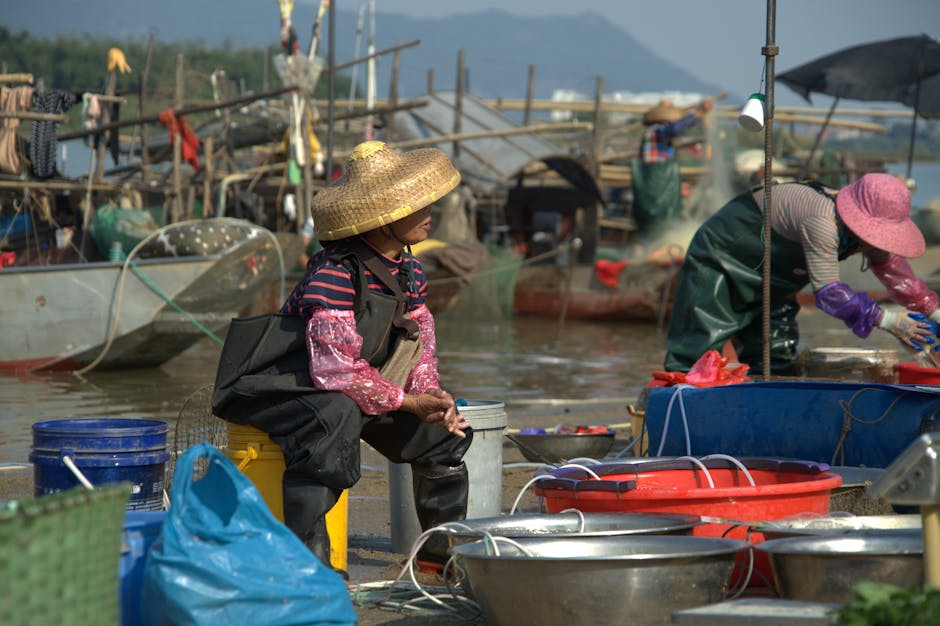
The water cannon attacks were particularly forceful, causing structural damage to at least two Philippine fishing boats. Eyewitnesses and official reports indicated broken windows, damaged communication equipment, and compromised hulls. More critically, several Filipino crew members sustained minor to moderate injuries, including cuts, bruises, and temporary disorientation from the impact of the water jets. These injuries, while not life-threatening, highlight the direct physical harm inflicted upon civilians engaged in their livelihood.
In another reported incident near Second Thomas Shoal, during a routine rotation and resupply mission for the Philippine military personnel stationed on the BRP Sierra Madre, Philippine resupply boats and their PCG escorts faced similar challenges. Chinese vessels allegedly shadowed, blocked, and again used water cannons, making it difficult for the Philippine vessels to deliver essential supplies. While the focus here was on impeding the mission, the aggressive tactics contributed to an atmosphere of heightened risk and potential for miscalculation.
Following these incidents, the Philippine government, through its Department of Foreign Affairs, lodged multiple diplomatic protests with Beijing. These protests condemned China's actions as illegal, dangerous, and a violation of international law, specifically UNCLOS and the 2016 arbitral ruling. Philippine President Ferdinand Marcos Jr. publicly denounced the actions, emphasizing the Philippines' commitment to protecting its fishermen and asserting its sovereign rights. He called for a peaceful resolution but reiterated the country's determination to defend its territory and its people.
China, in response, has largely maintained its customary stance. Beijing's foreign ministry spokespersons asserted that Chinese vessels were operating within "indisputable Chinese sovereignty" and accused the Philippines of infringing on Chinese territory and maritime rights. They claimed that Chinese actions were "professional and restrained" and were necessary responses to "illegal intrusions" by Philippine vessels. China has consistently rejected the validity of the 2016 arbitral ruling, framing any Philippine activities in these areas as provocations. This starkly contrasting narrative underscores the deep-seated disagreement and lack of common ground on the legal and historical basis of their claims.
Impact
The recent incidents in the South China Sea have far-reaching implications, affecting not only the immediate parties but also regional stability and international maritime norms. The most direct impact falls upon the Filipino fishermen and their communities.
For the fishermen, the South China Sea, particularly areas like Scarborough Shoal, represents traditional fishing grounds that have sustained generations. The constant harassment, damage to boats, and physical injuries pose an existential threat to their livelihood. Fear of confrontation with Chinese vessels often deters them from venturing into these rich fishing areas, leading to reduced catches and significant economic losses. The psychological toll of operating under constant threat, facing powerful foreign government vessels, is also substantial, creating an environment of anxiety and insecurity. Repairing damaged boats incurs substantial costs, further burdening already marginalized communities.
For the Philippines as a nation, these incidents represent a direct challenge to its sovereignty and sovereign rights within its Exclusive Economic Zone. The inability to fully protect its citizens and assets in its own waters undermines national security and the rule of law. Diplomatically, the repeated confrontations strain relations with China, making constructive dialogue and cooperation on other fronts more difficult. Domestically, the government faces increasing pressure to assert its rights more forcefully, balancing the need for de-escalation with the imperative to defend national interests and protect its citizens. Public opinion is often galvanized by images and reports of Filipino fishermen being bullied, fueling nationalist sentiment.
Regionally, the escalating tensions in the South China Sea raise concerns among other claimant states and ASEAN members. The consistent disregard for international law, particularly the 2016 arbitral ruling, by a major power like China, sets a dangerous precedent for maritime disputes globally. It threatens the principle of freedom of navigation and overflight, vital for international trade, and undermines the UNCLOS framework. The actions risk destabilizing a critical maritime region, potentially drawing in external powers and complicating efforts towards a unified regional security architecture.
Economically, while direct impacts on global trade routes might not be immediate from specific fishing incidents, the broader pattern of instability in the South China Sea, through which a significant portion of global trade passes, poses long-term risks. Potential disruptions to shipping, increased insurance costs, or limitations on resource exploration in disputed areas could have wider economic repercussions for the region and beyond. The incidents also highlight the vulnerability of smaller nations to the actions of larger powers, impacting investment confidence and regional economic integration.
What Next
The trajectory of the South China Sea dispute following these recent incidents is likely to involve a multi-pronged approach from the Philippines, coupled with continued responses from China and observation from the international community.
Diplomatically, the Philippines will continue to pursue protests and engage in bilateral and multilateral discussions. Further diplomatic notes verbale are expected to be lodged with China, reiterating the Philippines' condemnation of aggressive actions and its adherence to the 2016 arbitral ruling. The Philippines is also likely to raise these concerns in regional forums such as the Association of Southeast Asian Nations (ASEAN) and potentially at the United Nations, seeking broader international support for its position and for the rule of law. While direct negotiations with China have yielded limited progress on core sovereignty issues, channels of communication are expected to remain open to manage incidents and prevent unintended escalation.
On the security front, the Philippines is expected to bolster its maritime presence and capabilities within its EEZ. This may include increasing patrols by the Philippine Coast Guard and potentially the Philippine Navy, aimed at protecting fishermen and asserting sovereign rights. Collaboration with treaty allies, particularly the United States, is also anticipated to deepen. This could manifest in more frequent joint maritime exercises, intelligence sharing, and potentially increased US presence or assistance in maritime domain awareness. The US has consistently reaffirmed its commitment to the Philippines under the Mutual Defense Treaty, and any perceived escalation could trigger further expressions of support or joint activities.
While direct military confrontation remains a low probability, the risk of miscalculation or accidental clashes increases with more frequent and aggressive encounters. Both sides will need to exercise restraint to avoid an incident that could spiral out of control. The Philippines may also explore legal avenues, though the focus is primarily on diplomatic and security measures given China's rejection of international arbitration.
In the long term, the situation underscores the need for a comprehensive and legally binding Code of Conduct in the South China Sea, a framework that ASEAN and China have been negotiating for years. Progress on this Code has been slow, but recent events may inject renewed urgency into its finalization, aiming to establish rules and mechanisms for managing disputes and preventing future incidents. However, significant differences in interpretation and political will continue to impede its swift conclusion.
The international community will continue to monitor the situation closely, with many nations emphasizing the importance of freedom of navigation and the peaceful resolution of disputes based on international law. Statements from countries like the US, Australia, Japan, and European Union members are expected to reiterate support for UNCLOS and the 2016 arbitral ruling, urging all parties to de-escalate tensions and adhere to international norms. The ongoing saga in the South China Sea remains a critical test of international law and regional stability in the Indo-Pacific.