George Russell of Mercedes secured a dramatic victory in the China Sprint race, held at the iconic Shanghai International Circuit on Saturday, April 20, 2024. The British driver navigated challenging conditions and intense competition to cross the finish line ahead of Ferrari's Charles Leclerc and his Mercedes teammate Lewis Hamilton, delivering a significant morale boost for the Silver Arrows.
Background: Shanghai’s Return and the Sprint Format
The Shanghai International Circuit welcomed Formula 1 back to its challenging asphalt after a four-year hiatus, largely due to the global pandemic. Known for its distinctive "snail" Turn 1-4 complex that tightens into a single apex, its formidable 1.2-kilometer back straight, and the high-speed Turn 13-16 section, the circuit demands a sophisticated balance of aerodynamic efficiency and mechanical grip. Its unique layout often rewards strategic tire management and precise driving, making it a true test for both car and driver. The return of the Chinese Grand Prix was highly anticipated by fans and teams alike, eager to see how modern F1 machinery would tackle its legendary corners.
Evolution of the Sprint Format
The 2024 season introduced a revised Sprint race format, designed to create a standalone competitive event separate from the main Grand Prix. This structure features a dedicated Sprint Shootout on Friday, determining the grid for Saturday's Sprint race. The Sprint itself is a shorter, approximately 100-kilometer race, awarding points to the top eight finishers (8 for first, 7 for second, down to 1 for eighth). Crucially, the Sprint results do not influence the starting grid for Sunday's Grand Prix, which has its own traditional qualifying session later on Saturday. This format adds an extra layer of strategic complexity and a valuable opportunity for teams to score championship points, transforming Friday and Saturday into action-packed days.
Mercedes’ Quest for Form in 2024
Mercedes-AMG Petronas F1 Team entered the 2024 season with high hopes for their W15 challenger, aiming to overcome the performance deficits that had plagued them in recent years. However, the initial races of the season presented continued challenges, with the team struggling to consistently extract optimal performance from their new car. Both George Russell and Lewis Hamilton had expressed frustrations regarding the W15's unpredictable handling and narrow operating window. Despite these hurdles, Russell, known for his analytical approach and consistent driving, had been diligently working with the team to understand and mitigate the car's limitations, often delivering performances that exceeded the car's perceived potential.
Ferrari’s Resurgence and Championship Aspirations
Scuderia Ferrari had shown promising signs of resurgence in the early stages of the 2024 campaign with their SF-24 car. The Italian outfit appeared to have made significant strides in addressing tire degradation, a critical area of weakness in previous seasons, and demonstrated improved race pace. Charles Leclerc, a key pillar of Ferrari's future, had been a consistent front-runner, challenging for podiums and displaying his characteristic blend of raw speed and strategic acumen. Ferrari's improved form positioned them as strong contenders for race victories and a serious threat to Red Bull's dominance, adding an extra layer of excitement to every race weekend.
Championship Context and Driver Ambitions
While Red Bull Racing, particularly Max Verstappen, had established a formidable lead in the Drivers' and Constructors' Championships, the Sprint format offered a crucial opportunity for other teams to chip away at their advantage. Every point gained in a Sprint race could prove vital in the long championship battle. For George Russell, a driver with a single Grand Prix victory to his name (Brazil 2022), the China Sprint represented a chance to reassert his winning capabilities and provide a much-needed morale boost for Mercedes. For Charles Leclerc, it was an opportunity to convert Ferrari's strong pace into tangible results, while Lewis Hamilton, in his final season with Mercedes before his high-profile move to Ferrari in 2025, was eager to secure any available silverware and demonstrate his enduring competitive edge.
Key Developments: A Race of Strategy and Skill
The China Sprint race unfolded as a captivating display of strategic foresight and on-track prowess, with fluctuating conditions playing a significant role in the outcome. The Sprint Shootout, held earlier on Friday, had already hinted at the unpredictable nature of the weekend. George Russell qualified in a strong third position, demonstrating the Mercedes W15's improved single-lap pace in specific conditions. Charles Leclerc secured second, while Lando Norris took a surprise pole position for McLaren. Lewis Hamilton, after a challenging qualifying session, started from seventh on the grid, setting the stage for a potential charge.
The Opening Laps and Early Exchanges
As the lights went out for the 19-lap Sprint race, the grid exploded into action. Norris, from pole, struggled slightly off the line, allowing Leclerc to immediately challenge for the lead into Turn 1. Russell, executing a clean start, managed to hold his position, avoiding the early skirmishes further down the field. The initial laps saw intense wheel-to-wheel racing, characteristic of the shorter Sprint format where every position gain is critical. Drivers were aggressive yet cautious, knowing that any contact could prematurely end their points-scoring opportunity. Hamilton, leveraging his vast experience, began to meticulously pick off cars ahead, demonstrating excellent race craft and tire management from the outset.
Mid-Race Battles and Strategic Plays
The middle phase of the Sprint race became a fascinating chess match of tire preservation and opportunistic overtakes. With no mandatory pit stops in the Sprint, tire degradation became the primary strategic variable. Russell, known for his smooth driving style, showcased exceptional management of his medium compound tires. He maintained a consistent pace, carefully balancing aggression with the need to ensure his tires would last the full distance. Leclerc, leading for a significant portion, focused on defending his position, showcasing his ability to place his Ferrari perfectly on track to deter potential overtakes. Meanwhile, Hamilton continued his relentless pursuit, methodically closing the gap to the front-runners. He capitalized on DRS zones along the long back straight, making several decisive moves to climb through the midfield.
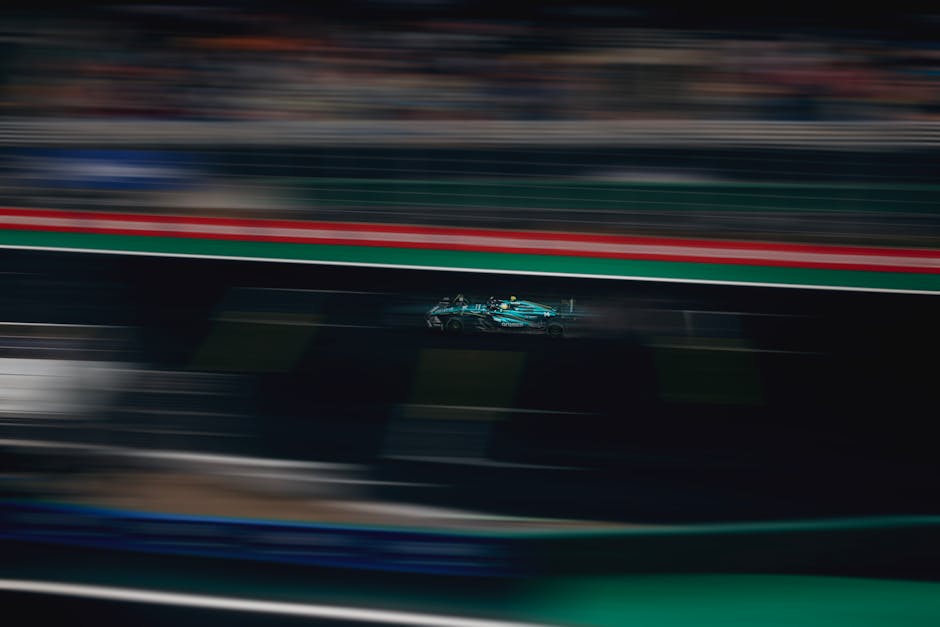
The Decisive Overtake
The turning point of the race arrived on Lap 14. Russell, having meticulously conserved his tires and closed the gap to Leclerc, launched his attack. Exiting Turn 13, he gained a significant tow on the back straight, positioning his Mercedes perfectly for an overtake into the challenging Turn 14 hairpin. With precision and commitment, Russell dived down the inside of Leclerc, completing a clean and decisive pass for the lead. The move was a testament to his race craft and the improved straight-line speed of the Mercedes W15 under specific conditions. Once in the lead, Russell focused on extending his advantage, demonstrating a commanding pace in the closing laps.
Leclerc’s Resilience and Hamilton’s Charge
Following Russell's overtake, Charles Leclerc faced renewed pressure from a charging Lewis Hamilton. The battle for second place became equally intense, with both drivers pushing their cars to the limit. Leclerc, despite losing the lead, displayed remarkable defensive driving, expertly weaving and blocking to keep Hamilton at bay. Hamilton, utilizing DRS and his vast experience, made several attempts to pass the Ferrari, but Leclerc's strategic placement and the SF-24's strong traction out of corners proved just enough to hold off the Mercedes veteran. The gap between them remained minimal until the checkered flag, highlighting the competitive nature of the field.
Crossing the Finish Line
George Russell crossed the finish line after 19 laps, securing his second career Formula 1 victory and a maiden Sprint win. His margin of victory over Charles Leclerc was a comfortable 2.1 seconds, a testament to his late-race pace and tire management. Leclerc held on for second, just 0.8 seconds ahead of Lewis Hamilton, who completed a strong recovery drive to claim the final podium spot. The result marked a significant moment for Mercedes, providing a much-needed boost after a challenging start to the season.
Impact: Shifting Dynamics and Morale Boosts
The China Sprint race delivered more than just points; it injected a fresh wave of confidence and altered perceptions across the Formula 1 paddock. The thrilling conclusion, particularly George Russell's decisive victory, had immediate and far-reaching implications for drivers, teams, and the broader championship narrative.
Points Scored and Championship Implications
Russell's win earned Mercedes a crucial 8 points in both the Drivers' and Constructors' Championships, elevating his personal standing and providing a significant contribution to the team's tally. Charles Leclerc's second place added 7 points for Ferrari, reinforcing their strong start to the season. Lewis Hamilton's third-place finish secured 6 points for Mercedes, further bolstering their Constructors' position. While Sprint points are a fraction of those awarded in a Grand Prix, these contributions are vital in the tightly contested midfield and in the ongoing battle for championship positions, where every point can make a difference over a 24-race season.
Mercedes’ Morale and Validation
For Mercedes, Russell's victory was an immense psychological lift. The team had faced considerable scrutiny and pressure in the wake of their recent struggles to match the performance of front-running rivals. This win, even in a Sprint, served as a powerful validation of their relentless development efforts and the strategic decisions made within the team. It demonstrated that the W15, under the right conditions and with precise driving, possesses the capability to challenge at the front. The immediate boost in team morale was palpable, providing renewed energy and belief as they continue their quest to return to consistent winning form.
Ferrari’s Continued Progress and Consistency
Despite not securing the win, Charles Leclerc's second-place finish underscored Ferrari's impressive progress in 2024. The SF-24's improved race pace and enhanced tire management were evident throughout the Sprint. Leclerc's ability to challenge for the lead and then defend robustly against a seven-time world champion like Hamilton highlighted Ferrari's consistency and their firm position as a top-tier contender. The result reinforced the belief within Maranello that they are on the right trajectory to challenge for race victories and ultimately, the championships.
Russell’s Standing and Hamilton’s Perspective
George Russell's victory further solidified his reputation as a formidable talent and a potential future world champion. It showcased his ability to seize opportunities, manage pressure, and deliver under competitive conditions. This win undoubtedly boosts his confidence and strengthens his position as a leader within the Mercedes team. For Lewis Hamilton, a podium finish from seventh on the grid was a strong performance, demonstrating his undiminished race craft and determination. However, it also served as a reminder of the challenges he faces with the W15, as he aims to secure a final victory for Mercedes before embarking on his new chapter with Ferrari. His consistent performance, despite the car's limitations, continues to be a testament to his enduring skill.
Fan Engagement and Media Narrative
The thrilling nature of the China Sprint, combined with the circuit's long-awaited return, captivated Formula 1 fans worldwide. The close battles, strategic overtakes, and unexpected winner contributed to a compelling narrative, suggesting a potentially more competitive season than initially predicted. Media outlets widely praised the excitement of the race, highlighting Russell's performance and the tight competition among the top three. This positive buzz is invaluable for Formula 1, fostering greater interest and anticipation for upcoming events.
Technical Data Gathering
Beyond the points and accolades, the Sprint race provided invaluable technical data for all teams. The shorter race distance, under specific track conditions, allowed engineers to gather crucial information on tire wear, car balance, and aerodynamic performance. This data is rigorously analyzed to fine-tune car setups, optimize tire strategies, and inform engine mode choices for the more demanding full-length Grand Prix on Sunday, where different variables and a longer race distance come into play.
What Next: Grand Prix Preparations and Championship Outlook
The conclusion of the China Sprint race immediately shifted focus to the main event of the weekend: the Chinese Grand Prix. While the Sprint offered a taste of the competition, the full-length Grand Prix presents a different set of challenges and opportunities, with significantly more championship points at stake.
Main Race Qualifying: The Immediate Priority
Following the Sprint, teams and drivers had only a few hours to reset and prepare for the crucial Grand Prix Qualifying session later on Saturday. This session would determine the starting grid for Sunday's main race, a factor often considered paramount at a circuit like Shanghai where track position can be vital. Drivers would be pushing their cars to the absolute limit, aiming for pole position or at least a strong top-tier starting spot. The data gathered from the Sprint regarding tire performance and track evolution would be meticulously analyzed to inform qualifying setups, particularly regarding tire warmer strategies and optimal energy deployment.
The Grand Prix: A Different Strategic Landscape
The Chinese Grand Prix, a much longer race with mandatory pit stops, presents a vastly different strategic landscape compared to the Sprint. Teams will need to consider fuel loads, multiple tire compounds (soft, medium, hard), and the potential for safety car periods or changing weather conditions. The ability to manage tire degradation over a full race distance, execute flawless pit stops, and adapt to evolving race scenarios will be key to success. Russell's strong performance in the Sprint will undoubtedly give Mercedes confidence, but they will be acutely aware that other teams, particularly Red Bull and Ferrari, will be fine-tuning their strategies for the longer race.
Strategic Adjustments and Development Trajectory
All teams will be poring over the telemetry from the Sprint to make final strategic adjustments for Sunday. Mercedes will be looking to replicate Russell's tire management and capitalize on any newfound pace. Ferrari will be aiming to convert their strong qualifying and Sprint pace into a Grand Prix victory, focusing on optimizing their race strategy to outmaneuver rivals. Red Bull, while not featuring in the Sprint podium, will be a formidable force, and their engineers will be meticulously analyzing their performance to ensure their car is optimized for the Grand Prix. The information gathered from the Sprint is invaluable for informing these crucial decisions, influencing everything from wing settings to engine mapping.
The Championship Battle Continues
While the Sprint points are valuable, the lion's share of championship points are awarded in the Grand Prix. The fight for the Drivers' and Constructors' Championships remains fierce, with every race weekend contributing to the long-term standings. A strong performance in the Chinese Grand Prix could significantly alter the championship picture, either by extending a lead or closing a gap. The outcome of the Sprint has undoubtedly added an extra layer of intrigue and expectation for Sunday's main event.
Upcoming Races and Driver Aspirations
Beyond Shanghai, the Formula 1 calendar moves swiftly to other iconic venues, including the Miami Grand Prix and the Emilia Romagna Grand Prix at Imola. Each race presents new challenges and opportunities for teams to showcase their development and for drivers to prove their mettle. George Russell's China Sprint victory will undoubtedly fuel his aspirations for more podiums and potentially a Grand Prix win this season. Charles Leclerc will be determined to convert Ferrari's strong form into a win, while Lewis Hamilton will continue his relentless pursuit of a final victory with Mercedes, aiming to leave the team on a high note before his highly anticipated move to Ferrari in 2025. The season promises continued excitement and intense competition at every turn.