Earth's familiar hydrological cycle offers profound insights into the exotic methane cycle dominating Saturn's largest moon, Titan. Scientists are leveraging terrestrial studies of rainfall, rivers, and seas to develop strategies for future exploration missions to this enigmatic world, particularly in preparation for NASA's upcoming Dragonfly mission. This comparative planetary science is unfolding across research institutions worldwide, from planetary science departments to engineering labs.
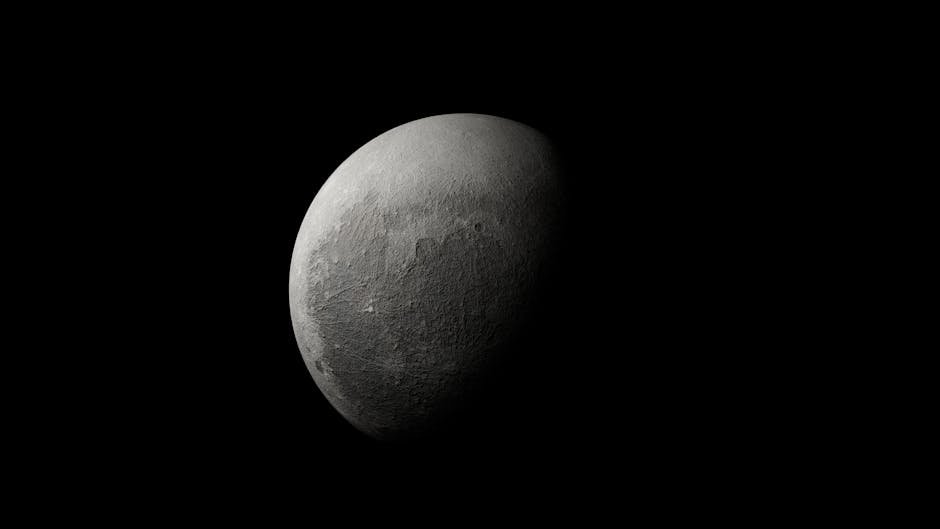
Background: Context and Timeline of Titan Exploration
Titan, Saturn's largest moon, has captivated astronomers since its discovery by Christiaan Huygens in 1655. For centuries, its dense, hazy atmosphere shrouded its surface in mystery. Early telescopic observations revealed little beyond its orange hue, hinting at a world unlike any other in our solar system. The true nature of Titan began to emerge with the advent of robotic planetary exploration.
The Voyager 1 spacecraft, during its flyby in November 1980, provided the first close-up images of Titan. While its primary mission objective was a gravitational assist towards interstellar space, the encounter with Titan was crucial. Voyager 1 confirmed the moon's substantial atmosphere, composed primarily of nitrogen with significant amounts of methane, but its thick haze prevented direct imaging of the surface. This discovery immediately set Titan apart, making it the only moon in our solar system with a dense atmosphere, a characteristic more akin to a planet. Scientists speculated about the possibility of oceans or lakes beneath the haze, but direct evidence remained elusive.
The true revelation of Titan's surface came with the Cassini-Huygens mission, a joint endeavor by NASA, ESA, and ASI. Launched in October 1997, the spacecraft arrived in the Saturn system in July 2004. Cassini spent 13 years orbiting Saturn, conducting numerous flybys of Titan, while the Huygens probe was specifically designed to descend through Titan's atmosphere and land on its surface.
On January 14, 2005, the Huygens probe successfully parachuted through Titan's atmosphere, becoming the first spacecraft to land on a moon in the outer solar system. During its 2.5-hour descent, Huygens captured images revealing a landscape sculpted by liquid, featuring what appeared to be ancient river channels and drainage networks, terminating in a dark, flat region resembling a dried-up lakebed. The probe's instruments detected methane and ethane in the atmosphere, and upon landing, found a surface consistency similar to damp sand, covered with pebble-like objects composed of water ice. The landing site, now known as Adiri, provided tantalizing evidence of a dynamic liquid cycle.
Following Huygens' groundbreaking landing, the Cassini orbiter continued its extensive study of Titan. Equipped with a Synthetic Aperture Radar (SAR), Cassini was able to pierce through the opaque atmosphere, revealing a remarkably Earth-like surface. Over its mission lifetime, Cassini mapped large portions of Titan, uncovering vast liquid methane and ethane seas (Kraken Mare, Ligeia Mare, Punga Mare), hundreds of smaller lakes, extensive river networks, and vast fields of organic sand dunes. These discoveries confirmed the existence of a robust, albeit cryogenic, hydrological cycle on Titan, where methane plays the role that water does on Earth. Methane evaporates from the surface, forms clouds, precipitates as rain, and flows across the landscape, carving channels and filling depressions to form lakes and seas. This cycle is driven by seasonal changes, with methane rain observed directly by Cassini.
The data from Cassini also suggested the presence of cryo-volcanism, where a mixture of water, ammonia, and other compounds might erupt from Titan's interior, resurfacing parts of the moon. Features like Doom Mons and Sotra Facula are considered strong candidates for cryo-volcanic structures. This geological activity implies an internal heat source, potentially maintaining a subsurface ocean of liquid water, adding another layer of complexity to Titan's potential for astrobiological interest.
Earth as a Comparative Planetology Laboratory
The striking similarities in surface features between Titan and Earth, despite their vastly different compositions and temperatures, make Earth an invaluable comparative planetology laboratory. On Earth, water is the primary volatile responsible for shaping landscapes through erosion, transport, and deposition. On Titan, liquid methane and ethane perform these same geological functions at an average surface temperature of -179 degrees Celsius (-290 degrees Fahrenheit).
Scientists study terrestrial hydrological processes – how rain forms and falls, how rivers carve valleys, how lakes and seas interact with coastlines, and how sediment is transported – to build models and hypotheses for Titan. For instance, understanding the fluid dynamics of water in a river on Earth can inform models of methane flow in a Titanian river, even with adjustments for Titan's lower gravity (about one-seventh of Earth's) and the different physical properties of methane (lower viscosity, lower surface tension than water). Similarly, the study of Earth's desert dunes, formed by wind, helps interpret the vast dune fields on Titan, which are composed of organic sand grains. This approach allows researchers to leverage decades of Earth-based geological and hydrological research to interpret remote sensing data from Titan and predict its behavior.
Key Developments: Recent Advances in Titan Analogs
The wealth of data from Cassini-Huygens has spurred significant advancements in leveraging Earth's water cycle as a blueprint for understanding Titan's methane cycle. Researchers are employing sophisticated modeling, terrestrial field studies, and advanced engineering to bridge the gap between our planet and the distant moon.
Advanced Earth-Based Modeling and Simulation
One of the most critical developments has been the adaptation and refinement of Earth-based hydrodynamic and atmospheric models for Titan's unique conditions.
Hydrodynamic Simulations: Scientists are using established terrestrial hydrological models, such as Delft3D and HEC-RAS (Hydrologic Engineering Center's River Analysis System), which are typically used to simulate water flow in rivers, estuaries, and coastal areas on Earth. These models are modified to account for Titan's lower gravity (approximately 1.35 m/s², compared to Earth's 9.8 m/s²), its denser atmosphere, and the distinct physical properties of liquid methane and ethane. Methane has a lower density, viscosity, and surface tension than water, which affects flow rates, erosion patterns, and wave dynamics. By inputting Titan's topography derived from Cassini radar data, these simulations can predict how methane rivers might flow, how channels are carved, and how lakes fill and evaporate. For example, researchers at the Massachusetts Institute of Technology have used such models to understand the formation of "phantom lakes" on Titan – depressions that appear to hold liquid but are often dry, indicating an active, but perhaps intermittent, hydrological cycle.
* Atmospheric Modeling: Earth's Global Circulation Models (GCMs), which simulate weather and climate patterns, are being adapted to understand Titan's methane weather. These models help predict methane cloud formation, precipitation patterns, and the global transport of atmospheric gases. Studies using these adapted GCMs have shown how Titan's seasonal changes, driven by its 29.5-year orbit around Saturn, influence the distribution of methane lakes and precipitation, with the northern hemisphere currently hosting most of the large seas. These models also help interpret observations of transient methane clouds and rain events captured by Cassini.
* Coastal Dynamics and Lacustrine Processes: The interaction between liquid bodies and solid landforms is critical on both Earth and Titan. Researchers study Earth's diverse coastal environments, from the Great Lakes of North America to the salt flats of Bolivia, to understand wave generation, shoreline erosion, sediment transport, and deposition in Titan's methane seas. Experiments conducted in cold chambers simulate methane-like liquids interacting with water-ice analogues, providing insights into processes like delta formation and the stability of shorelines under cryogenic conditions. The morphology of Titan's Kraken Mare, for instance, exhibits features that strongly resemble Earth's large seas, suggesting similar processes of wave action and tidal forces, albeit with different fluids.
Cryo-volcanism Research and Terrestrial Analogs
The hypothesis of cryo-volcanism on Titan is a key area of investigation, drawing parallels with various terrestrial phenomena. Cryo-volcanism involves the eruption of volatile compounds like water, ammonia, and methane from a planet's or moon's interior, rather than molten rock.
Mud Volcanoes and Lava-Ice Interactions: On Earth, mud volcanoes, found in regions like Azerbaijan or the Caspian Sea, involve the eruption of mud and gas, often driven by tectonic forces. While not a perfect analog, they offer insights into fluid-rich eruptions. More directly relevant are studies of lava flows interacting with ice in places like Iceland or Antarctica, where volcanic heat melts and interacts with frozen water. This helps scientists model how a warmer, subsurface water-ammonia mixture might erupt onto Titan's frigid water-ice crust, forming features like domes, flows, and calderas. The properties of such "cryo-lava" would be vastly different from silicate lava, flowing more slowly and solidifying into water ice.
* Deep-Sea Hydrothermal Vents: While not directly volcanic, Earth's deep-sea hydrothermal vents, which release chemically rich, warm fluids from the seafloor, provide an analog for chemosynthesis and potential subsurface energy sources. If Titan has a subsurface liquid water ocean, cryo-volcanic activity could potentially provide energy and chemicals for primitive life, similar to how life thrives around Earth's vents without sunlight.
Sensor Development and Testing for Extreme Environments
Preparing for missions like Dragonfly requires the development of instruments capable of operating in Titan's extreme cryogenic environment. Earth-based facilities play a crucial role in this.
Cryogenic Test Chambers: Specialized laboratories, such as those at NASA's Jet Propulsion Laboratory or Johns Hopkins Applied Physics Laboratory, house large vacuum chambers that can simulate Titan's atmospheric pressure and its intensely cold temperatures (down to -180°C). Instruments designed for Dragonfly, including its mass spectrometer (DraMS), gamma-ray and neutron spectrometer (DraGNS), and meteorological sensors (DraGMet), undergo rigorous testing in these chambers. This ensures their functionality, durability, and accuracy under conditions mimicking Titan's surface and atmosphere.
* Fluid Property Research: Understanding the behavior of liquid methane and ethane at cryogenic temperatures is essential for instrument design. Researchers conduct experiments to precisely measure the density, viscosity, heat capacity, and thermal conductivity of these liquids, which are critical inputs for engineering designs related to fluid sampling, heat management, and sensor calibration.
Autonomous Navigation and Robotics
The vast distances and communication delays inherent in outer solar system missions necessitate highly autonomous spacecraft. Earth-based robotics research, particularly in challenging environments, directly informs the development of Titan explorers.
Rotorcraft Autonomy: Dragonfly is a rotorcraft, a drone-like vehicle designed to fly between multiple sites on Titan. Developing its autonomous navigation system involves extensive testing of similar terrestrial drones in complex, unmapped terrains on Earth, such as deserts, rocky fields, and remote wilderness areas. Algorithms for hazard avoidance, path planning, and scientific target selection are refined through these Earth-based trials. The ability to navigate without real-time human intervention is paramount given the light-time delay of over an hour between Earth and Saturn.
* Sensor Fusion for Navigation: Dragonfly will use a suite of sensors, including cameras, radar, and altimeters, for navigation. Research on Earth focuses on fusing data from these diverse sensors to create robust, real-time maps of the terrain and ensure safe flight and landing. Lessons learned from autonomous vehicles and Mars rovers are directly applicable.
Data Analysis Techniques and Machine Learning
The sheer volume of data returned by Cassini required advanced analysis techniques, many of which draw parallels with Earth observation.
Machine Learning for Feature Identification: Researchers are applying machine learning algorithms to Cassini's radar imagery to automatically identify and classify geological features on Titan, such as river channels, lake basins, and dune fields. These algorithms are often trained on analogous Earth satellite imagery, learning to recognize patterns that indicate fluvial erosion or sedimentary deposition. This accelerates the mapping process and helps uncover subtle features that might be missed by human observers.
* Topographic Reconstruction: Refining topographic maps of Titan's surface from radar altimetry and stereo imaging data benefits from techniques developed for Earth's terrain mapping. Improved topographic models are crucial for planning safe landing sites and flight paths for Dragonfly.
Impact: Who is Affected and Benefits from Titan Research
The ongoing research into Titan, heavily informed by Earth's hydrological processes, has far-reaching impacts across various scientific, technological, and societal domains.
Planetary Scientists and Geologists
For planetary scientists and geologists, Titan represents an unparalleled natural laboratory for understanding planetary evolution. It challenges the traditional view of what constitutes a "habitable" world and expands our understanding of geological processes.
Universal Geological Principles: By observing similar fluvial, lacustrine, and aeolian (wind-driven) processes on Titan and Earth, scientists gain confidence that certain physical laws governing fluid dynamics and erosion are universal, transcending differences in composition and temperature. This allows for a more robust framework for interpreting geological features on other planets and moons across the solar system and beyond.
* Diverse Planetary Environments: Titan's methane cycle demonstrates that complex, dynamic surface processes can occur in environments vastly different from Earth. This expands the conceptual toolkit for exploring exoplanets, where liquid water may not always be the primary solvent. It pushes scientists to consider a broader range of conditions under which planets evolve and develop unique surface features.
* Cryo-geology: The study of Titan has significantly advanced the field of cryo-geology, which focuses on geological processes involving ice and other frozen volatiles. This knowledge is crucial for understanding other icy moons like Europa and Enceladus, which are prime targets for astrobiological exploration due to their subsurface liquid water oceans.
Engineers and Technologists
The challenges of exploring Titan push the boundaries of engineering and technology, leading to innovations with potential applications beyond space exploration.
Cryogenic Engineering: Designing instruments and spacecraft to operate reliably at -179°C requires breakthroughs in materials science, thermal management, and power systems. Innovations in cryocoolers, low-temperature electronics, and high-efficiency insulation developed for Titan missions can find applications in terrestrial fields such as superconductivity, medical imaging (MRI), and industrial gas processing.
* Autonomous Systems: The necessity for highly autonomous navigation and scientific decision-making for missions like Dragonfly drives advancements in artificial intelligence, robotics, and sensor fusion. These technologies have direct relevance to autonomous vehicles, drones for terrestrial exploration or delivery, and remote sensing applications on Earth.
* Power Generation: Radioisotope thermoelectric generators (RTGs), which convert heat from radioactive decay into electricity, are essential for deep-space missions where solar power is insufficient. Continuous development of more efficient and robust RTGs for missions like Dragonfly contributes to a deeper understanding of long-duration power sources for remote or extreme terrestrial environments.
Astrobiologists and Astrobiology
Titan is a prime target for astrobiology, not necessarily for life as we know it, but for understanding the complex chemistry that could lead to life.
Prebiotic Chemistry Laboratory: Titan's rich organic chemistry, driven by solar radiation interacting with methane and nitrogen in its atmosphere, results in a complex haze and surface deposits of various hydrocarbons. The presence of liquid methane/ethane lakes provides a solvent for these organics. This makes Titan a natural laboratory for studying prebiotic chemistry – the chemical reactions that occurred on early Earth before the emergence of life. It offers a unique environment where complex organic molecules can interact in a non-aqueous solvent, potentially revealing alternative pathways for the origin of life.
* Expanding the Search for Life: While Titan's surface is too cold for liquid water, and thus for Earth-like life, the possibility of a subsurface liquid water ocean, warmed by internal radioactivity and possibly cryo-volcanic activity, makes it an intriguing candidate for harboring microbial life. The study of Titan helps astrobiologists broaden their definition of potentially habitable environments and consider diverse biochemical pathways.
Public Engagement and Education
Space exploration, particularly to exotic worlds like Titan, has a profound impact on public imagination and STEM education.
Inspiration and Wonder: Discoveries on Titan, such as methane lakes and rivers, resonate with the public because they are familiar concepts applied to an alien world. This fosters a sense of wonder and curiosity about the universe, inspiring future generations to pursue careers in science, technology, engineering, and mathematics.
* Interdisciplinary Learning: The study of Titan inherently requires an interdisciplinary approach, combining geology, atmospheric science, chemistry, physics, and engineering. This provides an excellent example for educators to demonstrate how various scientific fields converge to solve complex problems, encouraging holistic learning.
* Global Collaboration: Missions to Titan involve international collaborations, highlighting the benefits of global scientific cooperation in tackling humanity's grand challenges and expanding our collective knowledge.
Space Agencies and Future Mission Planning
For space agencies like NASA and ESA, the insights gained from Earth-based Titan research are fundamental for designing, executing, and optimizing future missions.
Mission Design and Risk Mitigation: Understanding Titan's environment, from its atmospheric dynamics to its surface properties, is critical for designing robust spacecraft and instruments. Earth-based simulations help identify potential risks, such as unexpected weather phenomena or challenging terrains, allowing engineers to build in redundancies and develop contingency plans.
* Operational Strategies: The knowledge of Titan's methane cycle informs operational strategies for future missions. For a mission like Dragonfly, understanding methane rainfall patterns helps in planning optimal flight windows and identifying areas of interest for sampling. Knowledge of surface composition aids in selecting landing sites and predicting instrument performance.
* Resource Prioritization: The ongoing research helps agencies prioritize scientific objectives and allocate resources effectively for future missions, ensuring that the most pressing questions about Titan's geology, chemistry, and potential for life are addressed.
What Next: Expected Milestones in Titan Exploration
The journey of understanding Titan is far from over. With the wealth of data from Cassini-Huygens now serving as a foundation, the next major milestone is the Dragonfly mission, poised to revolutionize our understanding of this enigmatic moon.
Dragonfly: A Leap in Autonomous Exploration
NASA's Dragonfly mission is a groundbreaking rotorcraft lander designed to explore multiple locations on Titan's surface. Scheduled for launch in July 2027, with an expected arrival in 2034, Dragonfly represents a bold step in autonomous planetary exploration.
Primary Goals: Dragonfly's overarching scientific objectives are to investigate Titan's habitability, study its methane cycle, and explore its rich prebiotic chemistry. It aims to understand the processes that have shaped Titan's surface and atmosphere, and to search for chemical biosignatures – complex organic molecules that could be precursors to, or evidence of, life.
* Operational Concept: Unlike previous landers, Dragonfly is a mobile platform. It will fly short distances (up to 10 kilometers per flight) between scientifically interesting sites, conducting investigations on the ground. This allows for unprecedented access to diverse geological settings, including vast dune fields, impact craters, and the margins of ancient lakebeds. Each "hop" will allow the spacecraft to survey its surroundings from the air before landing to collect samples and perform in-situ analyses. The mission is planned for a nominal duration of 2.7 Earth years on Titan, covering hundreds of kilometers.
* Key Instruments: Dragonfly carries a sophisticated suite of instruments:
* DraMS (Dragonfly Mass Spectrometer): This instrument will identify the chemical components of Titan's surface materials and atmosphere, searching for complex organic molecules and biosignatures.
* DraGNS (Dragonfly Gamma-Ray and Neutron Spectrometer): This spectrometer will determine the elemental composition of the surface and subsurface, revealing the presence of water ice, silicates, and various organic compounds. It can also detect the presence of a subsurface ocean.
* DraGMet (Dragonfly Meteorology and Geophysics Package): This package includes sensors to measure atmospheric pressure, temperature, wind speed, and humidity (of methane and ethane). It also contains a seismometer to detect "Titanquakes" and study the moon's internal structure.
* DraGNC (Dragonfly GNC and Camera Suite): This suite of cameras will provide high-resolution images of Titan's surface and atmosphere, crucial for navigation, geological context, and scientific observation. It will capture images during flight and on the surface, offering unparalleled views of Titan's diverse landscapes.
* Expected Discoveries: Dragonfly is expected to provide direct evidence of Titan's surface composition, revealing the specific organic molecules present in different environments. It will offer insights into the processes of methane rainfall, evaporation, and surface flow through direct measurements. By exploring multiple sites, it will paint a comprehensive picture of Titan's geological and chemical diversity, potentially identifying areas where prebiotic chemistry is most active or where conditions might be most favorable for a subsurface ocean.
Future Missions: Beyond Dragonfly
While Dragonfly represents the immediate future, scientists are already conceptualizing subsequent missions to further explore Titan's mysteries.
Lake/Sea Probes (Titan Submarine): One of the most ambitious future concepts is a submersible mission to explore one of Titan's large methane-ethane seas, such as Kraken Mare or Ligeia Mare. Such a mission would draw heavily on Earth's deep-sea exploration technologies, adapting autonomous underwater vehicles (AUVs) to operate in a cryogenic liquid hydrocarbon environment. A Titan submarine could directly sample the liquid, study its chemical composition, search for unique geological features on the seafloor, and look for evidence of cryo-volcanic vents beneath the waves. This would provide unparalleled insights into the dynamics and potential habitability of Titan's liquid bodies.
* Advanced Orbital Radar: Future orbiters equipped with higher-resolution radar instruments could provide even more detailed maps of Titan's surface, potentially detecting subtle changes over time, such as shifts in shorelines or new fluvial features. Enhanced radar could also penetrate deeper into the subsurface, searching for evidence of cryo-volcanic activity or subsurface liquid water.
* Sample Return Missions: The ultimate goal for many planetary scientists is a sample return mission, bringing pieces of Titan back to Earth for detailed laboratory analysis. This would be incredibly complex due to the cryogenic conditions required to preserve volatile samples and the immense distance. However, a sample return could provide definitive answers about Titan's organic chemistry, the potential for life, and its geological history.
Continued Earth-Based Research
Even with future missions planned, Earth-based research will remain a cornerstone of Titan exploration.
Refinement of Models: Atmospheric and hydrological models will continue to be refined with new data from Dragonfly, leading to more accurate predictions of Titan's weather and climate patterns.
* New Cryogenic Technologies: The development of new materials, more efficient power sources, and advanced cryogenic sensors will continue, pushing the boundaries of what is possible in extreme environments.
* Terrestrial Analog Studies: Further field studies in Earth's extreme environments – such as the Arctic permafrost, desert rivers, high-altitude lakes, and even deep-sea environments – will continue to provide valuable insights into processes that might occur on Titan.
* International Collaboration: The global scientific community will continue to collaborate, sharing data, expertise, and resources to collectively unravel the mysteries of Titan.
Titan stands as a testament to the diversity of worlds in our solar system, a cold mirror reflecting Earth's familiar water cycle in an exotic methane form. By studying our own planet, we are not just preparing to explore Titan; we are expanding our understanding of the fundamental processes that shape planets and, perhaps, the very definition of where life can arise. The journey to Titan is a journey of discovery, driven by Earth's lessons and fueled by human ingenuity.