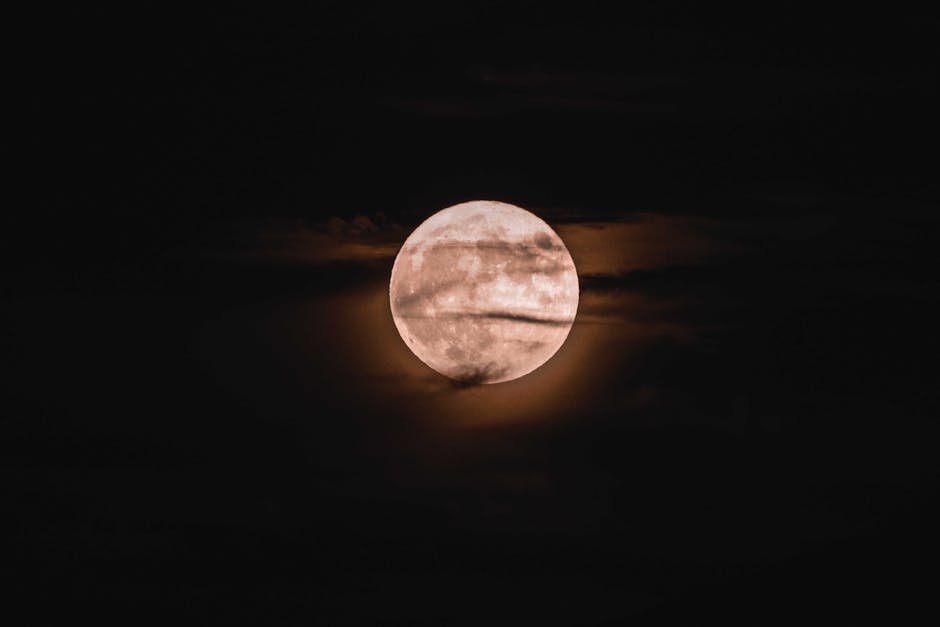
This November, the celestial spectacle of a supermoon captivated audiences across the globe, offering an extraordinary view of our nearest cosmic neighbor. The event, which reached its peak illumination on November 15th, presented the Moon appearing notably larger and brighter than its usual full phase, creating breathtaking vistas from urban centers to remote wilderness. Millions turned their gaze skyward to immerse themselves in this rare astronomical phenomenon.
Background: Unpacking the Supermoon Phenomenon
The term "supermoon" has become a popular descriptor for a full or new moon that occurs when the Moon is at its closest point to Earth in its elliptical orbit, a point known as perigee. When a full moon coincides with perigee, it appears significantly larger and more luminous than an average full moon. This alignment is technically referred to as a "perigee-syzygy" by astronomers.
The concept of a supermoon was first coined by astrologer Richard Nolle in 1979. He defined it as a new or full moon occurring when the Moon is within 90% of its closest approach to Earth in a given orbit. While not a formal astronomical term, it has been widely adopted by the public and media due to its evocative nature.
The Moon's orbit around Earth is not a perfect circle but an ellipse. This means there are times when it is closer to Earth (perigee) and times when it is farther away (apogee). The average distance between the Earth and the Moon is approximately 384,400 kilometers (238,900 miles). During perigee, this distance can shrink to about 363,104 kilometers (225,623 miles), while at apogee, it can stretch to 406,696 kilometers (252,088 miles).
When a full moon occurs at or near perigee, it can appear up to 14% larger in diameter and 30% brighter than a full moon at apogee. This difference, while sometimes subtle to the naked eye without a direct comparison, becomes strikingly apparent when the Moon is low on the horizon, creating the "moon illusion" where it appears even larger due to foreground objects.
Historically, full moons have been given various names by different cultures, often reflecting seasonal changes. November's full moon is traditionally known as the Beaver Moon, named by Native American tribes for the time when beavers are actively preparing for winter or when beaver traps were set. It is also sometimes referred to as the Frost Moon. The coincidence of the Beaver Moon with a supermoon adds another layer of cultural resonance to the celestial event.
The Moon's gravitational pull significantly influences Earth's tides. During a supermoon, the slightly increased gravitational force can lead to marginally higher tides, known as perigean spring tides. While these tides are typically only a few centimeters higher than normal spring tides, their effects can be more noticeable in coastal areas, especially when combined with other factors like strong winds or storm surges. This subtle but measurable impact underscores the Moon's continuous influence on our planet.
Key Developments: Observing This November’s Supermoon
This November's supermoon garnered significant attention due to its particular proximity to Earth, making it a noteworthy event for both seasoned astronomers and casual skywatchers. While not every supermoon is equally "super," the specific alignment this year positioned the Moon exceptionally close to our planet, enhancing its visual impact.
Advancements in observation technology played a crucial role in amplifying the experience. High-resolution telescopes, both professional and amateur, provided stunning close-up views of the lunar surface, revealing craters, maria, and other geological features with remarkable clarity. Digital astrophotography techniques have also evolved, allowing enthusiasts to capture incredibly detailed and vibrant images of the supermoon, often blending multiple exposures to achieve optimal brightness and sharpness.
The widespread availability of live streams from observatories and amateur astronomers around the world allowed millions to witness the supermoon in real-time, regardless of their local weather conditions or geographical location. These virtual viewing parties democratized access to the spectacle, fostering a global sense of shared wonder. Organizations like NASA and various astronomical societies provided educational commentaries during these streams, explaining the science behind the supermoon and offering viewing tips.
Public awareness and engagement surrounding astronomical events have surged in recent years, partly fueled by accessible scientific communication and vibrant online communities. Social media platforms became hubs for sharing photographs, videos, and personal experiences of the supermoon, creating a global conversation. Hashtags related to the event trended worldwide, with users posting everything from professional-grade astrophotography to simple smartphone snaps, all contributing to the collective excitement.
From a scientific perspective, supermoon events offer unique opportunities. Lunar laser ranging experiments, which involve bouncing lasers off reflectors left on the Moon by Apollo missions, can be particularly effective during perigee. The closer proximity improves signal strength and precision, allowing scientists to refine measurements of the Earth-Moon distance and study lunar dynamics with greater accuracy. These experiments contribute to our understanding of general relativity and the Moon's internal structure.
Comparing this supermoon to others throughout the year provides valuable context. While several supermoons can occur in a single year, they are not all equally close. Astronomical calculations determine the exact perigee distance for each event. This November's supermoon was distinguished by being among the closest of the year, contributing to its enhanced visual appeal and making it a prime target for observation and study. The increased public interest surrounding such events also serves as a powerful tool for STEM education and outreach, inspiring a new generation of scientists and astronomers.
Impact: A Global Spectacle and Its Reach
The November supermoon had a broad and multifaceted impact, resonating across various sectors from public engagement to scientific research and even local economies. Its inherent beauty and accessibility made it a truly global event, uniting people under a shared celestial experience.
Millions of people worldwide participated in observing the supermoon. Urban dwellers sought out clear vantage points, often gathering in parks or on rooftops, while those in rural areas benefited from darker skies, enhancing the Moon's brilliance. This collective act of skywatching fostered a sense of community and shared wonder, transcending geographical and cultural boundaries. Many families used the occasion as an educational opportunity, teaching children about lunar phases, orbits, and basic astronomy.
The event was a boon for astrophotographers, both amateur and professional. Specialized workshops and online tutorials emerged, guiding enthusiasts on how to best capture the supermoon's majesty. Photographers experimented with various lenses, exposure settings, and compositions, often incorporating terrestrial elements like city skylines, ancient monuments, or natural landscapes to create stunning juxtaposition. The resulting images flooded social media, showcasing the Moon's beauty from countless unique perspectives and inspiring others to take up the hobby.
Tourism also saw a subtle boost. Observatories and planetariums hosted special viewing nights, attracting large crowds eager to use powerful telescopes and learn from expert astronomers. In areas known for their dark skies, such as national parks or designated dark-sky preserves, local businesses experienced increased patronage as visitors sought optimal viewing conditions away from light pollution. Some tour operators organized "supermoon safaris," guiding groups to prime locations for an unobstructed view.
Scientifically, supermoon events, while not revolutionary, provide valuable data points. The slightly increased gravitational pull on Earth's crust and oceans, although minimal, is a measurable phenomenon. Geoscientists monitor tidal gauges and seismic activity during these times, contributing to long-term studies of Earth's dynamic systems. For lunar scientists, the heightened public interest often translates into greater support for lunar exploration and research initiatives, as the Moon is brought to the forefront of public consciousness.
The educational impact was significant. Schools incorporated the supermoon into their science curricula, using it as a tangible example of orbital mechanics and celestial phenomena. Online educational platforms and news outlets produced accessible content explaining the science behind the event, demystifying astronomical concepts for a broad audience. This widespread educational outreach helped to foster scientific literacy and ignite curiosity about the universe.
Culturally and psychologically, the supermoon evoked a sense of awe and fascination. Throughout history, the Moon has held profound significance in myths, legends, and spiritual practices across cultures. A supermoon, with its enhanced presence, often amplifies these feelings, prompting contemplation about our place in the cosmos and the natural rhythms of the universe. For many, it was a moment of quiet reflection, connecting them to something larger than themselves.
Economically, the supermoon indirectly stimulated sales of related goods. Retailers reported increased interest in telescopes, binoculars, camera equipment, and astronomy-themed books and merchandise. This minor economic ripple effect demonstrates how even natural phenomena can have tangible impacts on consumer behavior and niche markets. Efforts to mitigate light pollution also gained traction in some communities, as the desire for clearer views of the supermoon highlighted the importance of preserving dark skies for future astronomical observations.
What Next: Future Gazing and Lunar Endeavors
The captivating display of this November's supermoon serves as a reminder of the continuous celestial ballet above us and sets the stage for future astronomical events and ongoing lunar exploration. The public's sustained interest in such phenomena underscores the enduring human fascination with the cosmos.
Looking ahead, skywatchers can anticipate more supermoon events in the coming years. While this November's supermoon was particularly close, the elliptical nature of the Moon's orbit ensures that perigee-syzygy alignments occur regularly. Typically, there are three to four supermoons in a given year, though their exact proximity to Earth varies. Enthusiasts can consult astronomical calendars for precise dates and times of future events, planning their viewing experiences accordingly. These recurring events provide ongoing opportunities for public engagement and education.
Beyond casual observation, the Moon remains a primary target for scientific research and space exploration. The Artemis program, led by NASA with international partners, aims to return humans to the lunar surface, including the first woman and person of color, and establish a long-term human presence. These missions will conduct extensive scientific investigations, studying lunar geology, the potential for water ice at the poles, and the Moon's role in the early solar system. The public's enthusiasm for events like the supermoon can directly translate into support and interest for these ambitious endeavors.
Future scientific research will continue to delve into the Moon's origins, evolution, and its interactions with Earth. Studies using lunar samples, remote sensing data, and sophisticated computer models are constantly refining our understanding. Scientists are also exploring the possibility of using the Moon as a stepping stone for deeper space exploration, leveraging its resources and lower gravity for missions to Mars and beyond. The data gathered from supermoon laser ranging experiments, for instance, contributes to the precise navigational requirements for such complex missions.
Technological advancements will undoubtedly enhance our ability to observe and understand the Moon. The next generation of ground-based telescopes, with adaptive optics systems, will provide even sharper views of the lunar surface, potentially revealing new details. Space-based observatories, free from atmospheric distortion, will offer unparalleled perspectives. Furthermore, citizen science projects, where public volunteers contribute to scientific research, are likely to expand, allowing more people to participate directly in lunar studies, from crater counting to monitoring transient lunar phenomena.
Continued public awareness and education efforts will be vital in sustaining interest in astronomy and space science. Educational institutions, science museums, and online platforms will likely increase their offerings related to lunar science, space exploration, and observational astronomy. Engaging the public through events like supermoon viewing parties, astrophotography competitions, and interactive online resources helps to foster scientific literacy and inspire future generations to pursue careers in STEM fields.
Finally, the discussion around preserving dark skies will continue to grow in importance. As urban areas expand and light pollution increases, the ability to clearly observe celestial events like supermoons diminishes for many. Advocacy groups and environmental organizations are working to promote responsible lighting practices and establish dark-sky reserves, ensuring that future generations can continue to immerse themselves in the spectacular views of our Moon and the wider universe. The awe inspired by a supermoon often serves as a powerful argument for these conservation efforts, reminding us of the profound value of an unblemished night sky.