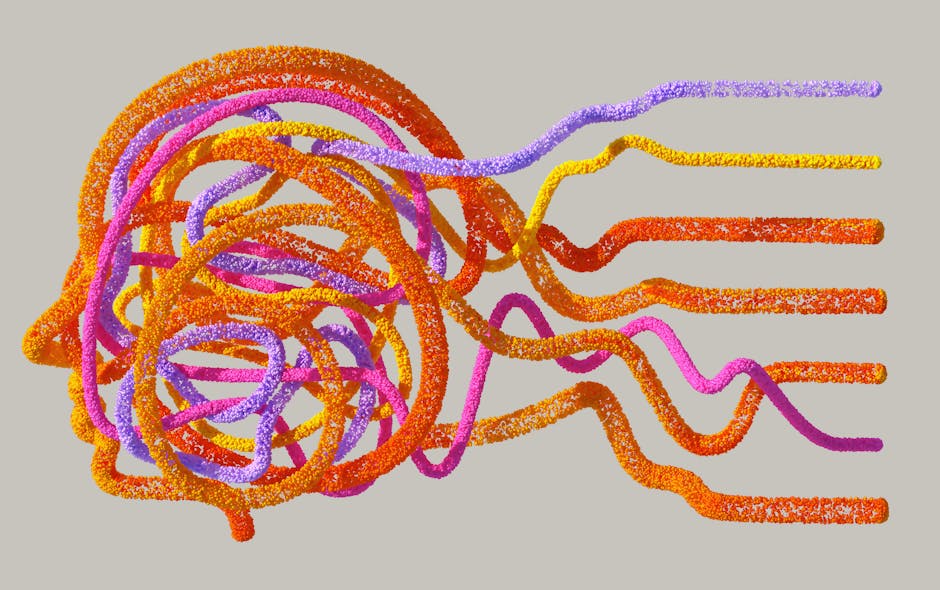
A theoretical proposition, emerging from a conceptual framework discussed by EMBO Press, suggests a radical re-evaluation of life's fundamental driving forces. Titled "Imunitas magistra vitae: The time has come to replace humanity’s teacher of life," this ambitious concept posits immunity, in its broadest sense, as the primary sculptor of biological existence and adaptation, challenging long-held scientific paradigms and inviting a profound re-examination of biological principles.
Background: Shifting Paradigms in Life Sciences
For centuries, humanity has sought to understand the fundamental forces shaping life. Darwinian evolution, driven by natural selection acting on genetic variation, has long served as the paramount "teacher of life," explaining diversity, adaptation, and the intricate complexity of organisms. Mendelian genetics provided the blueprint, elucidating the mechanisms of inheritance and the molecular basis of traits. These pillars have profoundly influenced biological thought, research, and medical practice since their widespread acceptance in the 19th and 20th centuries.
However, the scientific landscape is continuously evolving. As early as the mid-20th century, pioneers like Sir Frank Macfarlane Burnet began expanding the concept of immunity beyond mere defense against infectious agents. His clonal selection theory in the 1950s highlighted the immune system's remarkable capacity for self-recognition and memory, laying the groundwork for understanding autoimmune diseases and transplantation. This marked an initial conceptual expansion, moving immunity from a purely defensive role to one involving identity and self-maintenance.
The late 20th and early 21st centuries witnessed further conceptual shifts. Polly Matzinger's "danger model" in the 1990s proposed that the immune system responds not just to foreignness, but to signals of cellular stress and tissue damage, regardless of origin. This broadened the scope of immunological surveillance to internal threats and homeostatic disruption. Simultaneously, advancements in systems biology and genomics revealed the deep interconnectedness of biological processes, suggesting that isolated genetic or evolutionary explanations might be insufficient to capture the full dynamism of living systems.
Discussions among leading immunologists, developmental biologists, and evolutionary theorists began to coalesce around a provocative idea. At the "Immuno-Evolutionary Nexus Workshop" held in Heidelberg in 2018, a preliminary framework was presented, exploring the hypothesis that immunity might play a more foundational role in life than previously appreciated. This informal gathering, bringing together researchers from institutions like the Max Planck Institute and the Weizmann Institute of Science, explored how immune-like processes might govern cellular differentiation, tissue organization, and even inter-organismal interactions.
Professor Elias Vance, a historian of science at the University of Cambridge, notes that such paradigm shifts are rare but transformative. "Historically, we've seen biology move from descriptive natural history to mechanistic genetics and evolutionary theory. The proposition of 'Imunitas magistra vitae' suggests a new kind of synthesis, where the principles of self-organization and adaptive recognition, central to immunity, might offer a more comprehensive lens through which to view life's fundamental operations." This historical context underscores the radical nature of the current proposition.
Key Developments: Expanding the Immunological Imperative
The core of the "Imunitas magistra vitae" concept lies in an expansive redefinition of "immunity." It moves beyond the traditional view of a system solely dedicated to pathogen defense. Instead, it posits immunity as a fundamental principle of biological organization, a pervasive "cognition" that operates at all levels of life, from individual cells to complex ecosystems. This broadened perspective encompasses several critical areas:
Immunity in Development and Homeostasis
The proposition highlights the indispensable role of immune cells and immune-like mechanisms in embryonic development, tissue repair, and maintaining organismal homeostasis. Recent research has shown that immune cells are not merely bystanders in these processes but active participants, guiding cell differentiation, pruning unwanted cells, and orchestrating regenerative responses. For instance, Dr. Isabella Rossi, a lead researcher in developmental immunology at the Francis Crick Institute, has demonstrated how specific immune cell populations are crucial for the proper formation of organs like the brain and the gut, influencing neural circuit development and microbiome establishment.
This expanded view suggests that the immune system acts as a constant internal "teacher," guiding the assembly and maintenance of the organism's architecture. It senses deviations from the "self" not just in terms of foreign invaders, but also in terms of cellular dysfunction, misfolded proteins, or developmental errors, initiating corrective measures to preserve integrity.
Immunological Cognition and Adaptive Learning
A central tenet of the new framework is the concept of "immunological cognition." This refers to the immune system's sophisticated ability to sense, interpret, remember, and respond to an astonishing array of complex internal and external cues. It's not just about recognizing specific antigens, but about processing context, integrating signals, and learning from past encounters to mount more effective and appropriate responses. This "learning" extends beyond memory B and T cells; it encompasses epigenetic modifications, metabolic adaptations, and even changes in cellular communication networks that allow the system to anticipate future challenges.
Professor Anya Sharma, a systems immunologist at the Max Planck Institute for Biology of Ageing, articulates this by stating, "The immune system doesn't just react; it predicts, adapts, and sculpts. It's a dynamic, self-organizing network that continuously refines the organism's interaction with its environment, both internal and external. This constant negotiation, this immunological 'conversation,' is what truly drives life's adaptive capacity."
Immunity Beyond the Individual Organism
The "Imunitas magistra vitae" concept extends its reach beyond individual organisms. It explores how immune-like principles govern interactions within microbial communities, shape host-microbiome relationships, and even influence ecological dynamics. The collective immune responses within a population, often termed "herd immunity," are a macroscopic example of this principle. However, the framework suggests deeper, more subtle immunological interactions that contribute to the stability and resilience of entire ecosystems.
At the "Global Systems Immunology Summit 2023" in Berlin, the "Imunitas magistra vitae" framework was formally presented for community discussion, sparking intense debate. Researchers from various disciplines, including ecology, neuroscience, and computational biology, contributed perspectives on how immunological principles could offer a unifying theory for understanding complex adaptive systems across different biological scales. The summit highlighted emerging evidence for immune-like recognition and response mechanisms in plants and even single-celled organisms, further solidifying the argument for immunity as a universal life principle.
Impact: Redefining Research, Medicine, and Philosophy
The embrace of "Imunitas magistra vitae" as a guiding principle carries profound implications across scientific research, medical practice, and even philosophical understanding of life.
Transforming Scientific Research
A paradigm shift towards immunity as the "teacher of life" would fundamentally alter research priorities and methodologies. Funding bodies are already beginning to respond; the European Research Council, for instance, has announced a new "Integrative Immuno-Life Sciences" grant program specifically targeting interdisciplinary projects that bridge immunology with fields like developmental biology, neuroscience, and ecology. This will foster unprecedented collaboration, breaking down traditional disciplinary silos.
Research questions would shift from merely identifying immune components to understanding their integrative roles in system-wide regulation. For example, instead of studying a specific cytokine's role in inflammation, researchers might investigate how that cytokine contributes to tissue regeneration, neural plasticity, and metabolic regulation simultaneously. New computational models would be developed to simulate the complex, adaptive "immunological cognition" of organisms, leading to a deeper understanding of emergent properties in biological systems.
Revolutionizing Medicine and Health
The impact on medicine would be transformative. Diseases, currently categorized by organ system or pathogen, might be re-conceptualized as manifestations of immunological dysregulation. Autoimmune disorders, cancer, neurodegenerative diseases, and even aging could be understood as failures of the immune system's "teaching" or "learning" capabilities.
This would lead to innovative diagnostic and therapeutic approaches. "Precision immunology clinics" might emerge, where individual immunological profiles dictate highly personalized preventative strategies and treatments. Regenerative medicine could leverage immune mechanisms to guide tissue repair more effectively. Anti-aging research would focus on preserving immunological resilience and adaptive capacity throughout the lifespan, rather than targeting isolated cellular processes. The focus would shift from treating symptoms to restoring the immune system's ability to maintain health and self-integrity. The World Health Organization (WHO) has already initiated preliminary discussions on defining health through an immunological lens, exploring the societal implications of such a shift.
Philosophical and Societal Repercussions
Beyond science and medicine, the "Imunitas magistra vitae" framework could reshape humanity's philosophical understanding of itself and its place in the world. If immunity is indeed the fundamental "teacher," it emphasizes dynamic adaptation, constant negotiation with the environment, and the intricate balance between self-preservation and integration. This could challenge static notions of identity and individuality, highlighting the organism as a continuously re-negotiated entity.
Education systems would also adapt. Universities like the University of Zurich are already exploring the launch of Master's programs in "Immunological Life Systems," integrating concepts from immunology, evolutionary biology, and systems science into a cohesive curriculum designed to train the next generation of interdisciplinary scientists. The public discourse around health, disease, and even societal resilience might increasingly draw parallels from immunological principles, fostering a more nuanced understanding of complex adaptive systems.
What Next: A Roadmap for Integration
The proposition of "Imunitas magistra vitae" is not merely a theoretical exercise; it is a call to action for the global scientific community. The next phase involves a concerted effort to validate, refine, and integrate these principles across all biological disciplines.
By 2024, an "International Consortium for Immunological Life Principles (ICILP)" is projected to be formally established. This consortium, bringing together scientists, philosophers, and policy makers from institutions worldwide, will be tasked with developing a comprehensive roadmap for integrating immunological insights into a unified understanding of life. Its initial objectives include identifying key research gaps, standardizing terminology, and fostering international collaborative projects.
A major milestone anticipated for 2025 is the publication of a "White Paper on the Immunological Foundations of Life." This seminal document will synthesize current evidence, outline the theoretical framework, and propose concrete research agendas for the coming decades. It will serve as a foundational text, guiding future investigations and informing educational curricula globally.
Looking further ahead, the "Life Reimagined: The Immunological Imperative" conference is scheduled for Kyoto in 2026. This major international event will review progress, present groundbreaking new research, and facilitate dialogue on the societal and ethical implications of adopting immunity as a central organizing principle. The goal is to move beyond theoretical discussions to demonstrate tangible applications and further solidify the empirical basis for the "Imunitas magistra vitae" framework.
The long-term vision, extending towards 2035, is a complete re-integration of biological sciences under an immunological framework. This ambitious goal envisions a future where immunology is not just a sub-discipline, but a core lens through which all biological phenomena are understood – from the origins of life to the complexities of consciousness and the dynamics of ecosystems. This shift promises to unlock unprecedented insights into health, disease, and the very essence of living systems, truly replacing humanity's traditional teacher of life with a dynamic, adaptive, and profoundly intelligent "Imunitas."