Tehran, Iran – In a dramatic turn in the ongoing Iran-Israel war, Iran's foreign ministry today issued a comprehensive ceasefire proposal, calling for an immediate cessation of hostilities, significant war reparations from Israel, and the establishment of Iranian sovereignty over the strategically vital Strait of Hormuz. The unprecedented demands have sent shockwaves across global capitals, drawing immediate and varied reactions from international powers and regional stakeholders.
Background: A Region on Edge Erupts into Direct Conflict
The roots of the current Iran-Israel conflict run deep, stemming from decades of geopolitical rivalry, proxy warfare, and ideological antagonism. For years, the two nations have engaged in a shadow war, characterized by cyberattacks, assassinations, naval skirmishes, and indirect confrontations through regional proxies such as Hezbollah in Lebanon, Hamas in Gaza, and various militia groups in Syria and Iraq. These tensions significantly escalated in late 2023 and early 2024, culminating in the direct military confrontation now gripping the Middle East.
Decades of Hostility and Proxy Wars
The Islamic Revolution of 1979 transformed Iran's relationship with Israel from a pragmatic, albeit cautious, alliance under the Shah to one of overt hostility. Iran's leadership frequently calls for the destruction of the Israeli state, while Israel views Iran's nuclear program, ballistic missile development, and support for militant groups as existential threats. This mutual animosity fueled a protracted proxy conflict across the Levant and Persian Gulf.
Iran's Revolutionary Guard Corps (IRGC) Quds Force has been instrumental in cultivating and arming non-state actors, providing military and financial support to Hezbollah, Hamas, and other factions. These groups have, in turn, launched numerous attacks against Israel, often drawing Israeli retaliatory strikes against targets in Gaza, Lebanon, and Syria. Israel has also been widely implicated in covert operations within Iran, including sabotage of nuclear facilities and the assassinations of key Iranian scientists.
The Path to Direct Confrontation: Key Escalations of 2024
The current large-scale conflict, which began in earnest in mid-2024, was the culmination of a series of rapid escalations. Analysts point to several critical junctures that transformed the long-standing shadow war into an overt military confrontation:
April 12, 2024 – Damascus Consulate Strike: An Israeli airstrike on an Iranian diplomatic compound in Damascus, Syria, resulted in the deaths of several senior IRGC commanders, including Brigadier General Mohammad Reza Zahedi. Iran vowed severe retaliation.
* April 26, 2024 – Iranian Retaliation: In response, Iran launched an unprecedented direct missile and drone attack against Israel. Hundreds of ballistic missiles, cruise missiles, and drones were fired from Iranian territory, targeting Israeli military bases and infrastructure. While most were intercepted by Israel and its allies, the attack marked a significant departure from Iran's previous reliance on proxies.
* May 3, 2024 – Israeli Counter-Retaliation: Israel responded with its own direct strikes deep within Iran, targeting IRGC bases, missile launch sites, and elements of Iran's nuclear infrastructure near Isfahan. This exchange of direct attacks shattered the previous rules of engagement and pushed both nations into open warfare.
* May-September 2024 – Sustained Conflict: The initial exchanges spiraled into a sustained conflict. Israel launched extensive air campaigns against Iranian military assets and proxy strongholds in Syria and Lebanon, while Iran and its allies continued to launch missile and drone attacks into Israel. Naval confrontations intensified in the Persian Gulf and Red Sea, disrupting global shipping.
* August 15, 2024 – Major Cyberattack: A sophisticated cyberattack, attributed by Iran to Israel and its Western allies, crippled significant portions of Iran's oil infrastructure and banking systems, leading to widespread economic disruption within Iran.
* September 10, 2024 – Humanitarian Crisis Deepens: The United Nations reported a rapidly deteriorating humanitarian situation in both Iran and Israel, with tens of thousands displaced, severe damage to civilian infrastructure, and critical shortages of medical supplies and food in conflict zones. Calls for a ceasefire intensified from international bodies.
The protracted conflict has seen both nations suffer significant military and economic damage, as well as mounting civilian casualties. International efforts to mediate a ceasefire had, until now, largely failed, with both sides maintaining maximalist positions regarding their security and strategic objectives.
Key Developments: Iran’s Bold Ceasefire Proposal
On October 26, 2024, Iranian Foreign Minister Hossein Amir-Abdollahian, speaking from Tehran, unveiled a three-point ceasefire proposal that immediately became the focal point of international diplomatic discussions. The proposal, delivered via a televised address and subsequently detailed in an official communication to the United Nations Security Council, outlined conditions Iran believes are essential for a lasting peace.
Immediate Cessation of Hostilities
The primary condition of Iran's proposal is an immediate and unconditional ceasefire across all fronts. This would entail a complete halt to all aerial bombardments, missile launches, naval engagements, and cyber warfare operations by both Iran and Israel, as well as their respective allies and proxies. Amir-Abdollahian stressed that this cessation must be verifiable and monitored by an independent international body, such as the United Nations, to ensure compliance.
"Our proposal begins with the most urgent need: the silencing of guns," Amir-Abdollahian stated. "The bloodshed must end immediately to allow humanitarian aid to reach those suffering and to create an environment conducive to genuine negotiation."
Demand for War Reparations
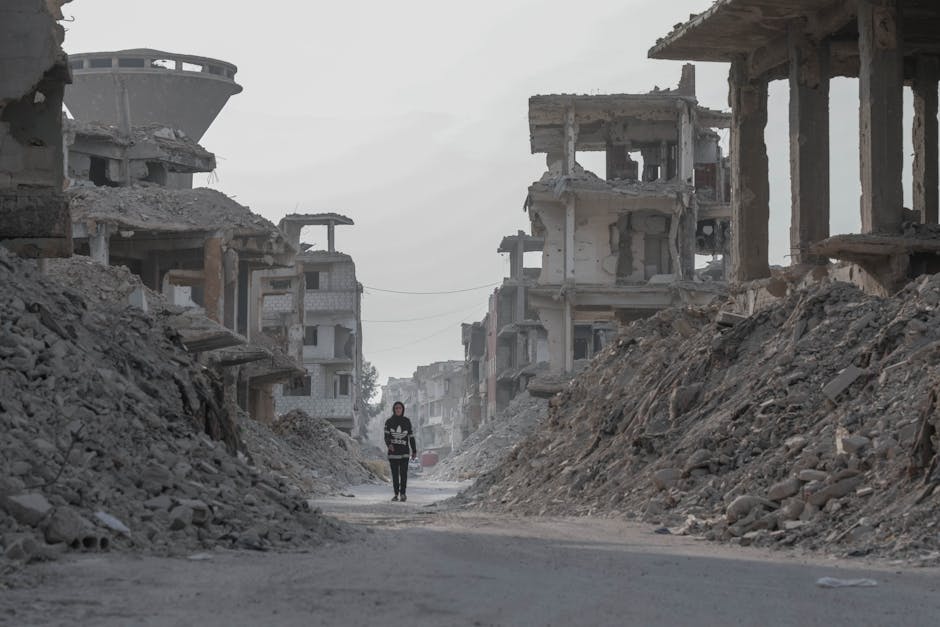
Perhaps the most contentious element of Iran's proposal is the demand for substantial war reparations from Israel. Iran asserts that Israel, with the backing of its Western allies, initiated the direct conflict through its strikes on Iranian assets and its persistent aggression against Iranian sovereign interests. Tehran claims the war has inflicted immense economic damage, widespread destruction of infrastructure, and significant human suffering within Iran.
The proposal calls for the establishment of an international fund, overseen by a neutral consortium of nations or the United Nations, to manage these reparations. While a specific figure was not publicly disclosed in the initial announcement, sources within the Iranian Foreign Ministry indicated that Tehran is seeking a sum in the range of $500 billion to $700 billion. This figure, according to Iranian officials, would cover the reconstruction of damaged cities, compensation for civilian casualties, restoration of critical infrastructure, and economic losses incurred due to the war and associated sanctions.
"The aggressor must bear the financial burden of its destructive actions," Amir-Abdollahian declared. "These reparations are not merely punitive; they are essential for the recovery and rebuilding of our nation, which has endured unjust aggression."
Sovereignty Over the Strait of Hormuz
The third and arguably most globally impactful demand is Iran's assertion of full and exclusive sovereignty over the Strait of Hormuz. The Strait, a narrow waterway connecting the Persian Gulf to the Arabian Sea, is one of the world's most critical chokepoints for oil transit, with approximately one-fifth of global oil consumption and a significant portion of liquefied natural gas (LNG) passing through it daily.
Under international law, the Strait of Hormuz is recognized as an international waterway, guaranteeing the right of "transit passage" for all vessels. While Iran and Oman share jurisdiction over the Strait, Iran's proposal seeks to unilaterally alter this status, granting Tehran exclusive control over its navigation. This would imply that all vessels, including military and commercial ships, would require explicit Iranian authorization for passage, potentially subject to Iranian fees, inspections, or even denial.
Amir-Abdollahian justified this demand by citing Iran's national security interests, particularly in light of the ongoing conflict and perceived threats to its maritime borders. He argued that Iranian control would ensure regional stability and prevent hostile foreign naval presence. "The Strait of Hormuz is our strategic lifeline and a cornerstone of our national security," he stated. "Full sovereignty will allow us to safeguard our borders and ensure the secure passage of legitimate trade, free from external interference."
International Reactions and Initial Responses
The proposal immediately triggered a flurry of international reactions, largely characterized by cautious optimism regarding a ceasefire but outright rejection of Iran's more controversial demands.
Israel: Prime Minister Benjamin Netanyahu's office swiftly dismissed Iran's proposal as "preposterous" and "a non-starter." A spokesperson stated, "Israel will not pay reparations to an aggressor state, nor will it ever concede international waterways to a regime that threatens global commerce. Our military operations will continue until our security objectives are met."
* United States: U.S. Secretary of State Antony Blinken welcomed the prospect of a ceasefire but firmly rejected the demands for reparations and, especially, sovereignty over the Strait of Hormuz. "The Strait of Hormuz is an international waterway vital to global commerce and energy security," Blinken affirmed. "Freedom of navigation is non-negotiable. While we support efforts for de-escalation, these specific demands are unacceptable."
* United Nations: UN Secretary-General António Guterres issued a statement calling for all parties to seriously consider any proposal that could lead to a cessation of hostilities and alleviate humanitarian suffering. However, he also emphasized the importance of international law regarding maritime passage and the principles of state sovereignty.
* European Union: EU foreign policy chief Josep Borrell expressed guarded optimism for a potential diplomatic opening but highlighted the complexities of Iran's demands. "While a ceasefire is paramount, any lasting solution must respect international law and ensure global economic stability," Borrell commented.
* Gulf Cooperation Council (GCC) States: Nations like Saudi Arabia, UAE, and Qatar expressed deep concern over the Strait of Hormuz demand. Their economies are heavily reliant on oil and gas exports through the Strait. A joint statement from the GCC underscored the critical importance of free and unimpeded navigation through the waterway for regional and global prosperity.
* Russia and China: Both nations, while typically more aligned with Iran on certain geopolitical issues, offered nuanced responses. Russia's Foreign Ministry called for "constructive dialogue" but avoided endorsing the specific demands. China's Ministry of Foreign Affairs reiterated its call for de-escalation and respect for international law, implicitly signaling concerns over the Hormuz proposal's impact on global trade.
Impact: A Proposal with Far-Reaching Consequences
Iran's ceasefire proposal, particularly its stipulations regarding war reparations and the Strait of Hormuz, carries profound implications for regional stability, the global economy, and the future of international maritime law.
Regional Geopolitics and Stability
The immediate impact of the proposal on regional geopolitics is one of heightened uncertainty and potential for further escalation. If Israel rejects the core demands, as it has signaled, the conflict is likely to continue, possibly with renewed intensity as both sides feel their positions have been publicly challenged.
Hardening of Positions: The maximalist nature of Iran's demands could entrench both sides further, making future negotiations more difficult. Israel perceives the demands as an attempt to legitimize Iranian aggression and undermine its sovereignty.
* Proxy Network Implications: The proposal does not explicitly address the future of Iran's proxy networks. Should a ceasefire be agreed upon, the role of groups like Hezbollah and various Iraqi and Syrian militias would remain a critical point of contention, influencing regional power dynamics.
* Gulf State Anxiety: The demand for Hormuz sovereignty has particularly alarmed Gulf states. Their economic security is directly tied to the Strait's open access. Any Iranian control beyond current international norms would be seen as a direct threat to their sovereignty and economic well-being, potentially leading to increased militarization and new security alliances in the region.
Global Economy and Energy Markets
The most significant global impact of Iran's proposal centers on the Strait of Hormuz. Its potential closure or restriction would trigger an unprecedented crisis in global energy markets and international trade.
Oil and Gas Prices: Even the *suggestion* of Iran controlling the Strait has already caused a spike in global oil and gas prices. Should Iran gain exclusive sovereignty and begin imposing restrictions or fees, the flow of approximately 20% of the world's oil supply (around 20 million barrels per day) and a substantial portion of LNG would be severely disrupted. Prices would skyrocket, potentially leading to a global recession.
* Shipping and Trade: Beyond energy, the Strait is a crucial artery for container ships carrying manufactured goods, raw materials, and food supplies. Any disruption would cause massive delays, increase shipping costs (through higher insurance premiums and longer alternative routes), and strain global supply chains already reeling from various crises.
* Insurance Markets: Marine insurance premiums for vessels operating in the Persian Gulf and Arabian Sea would become prohibitively expensive, effectively deterring many shipping companies from operating in the region.
* Alternative Routes: While some alternative pipelines exist (e.g., Saudi Arabia's Petroline), their capacity is insufficient to compensate for a significant closure of the Strait. Long-term rerouting of trade around the Arabian Peninsula would add substantial costs and transit times.
Humanitarian Crisis
The ongoing conflict has already created a severe humanitarian crisis. A prolonged stalemate or escalation following the proposal's rejection would worsen the situation dramatically.
Displacement and Refugees: Continued fighting would lead to further internal displacement within Iran and Israel, and potentially a new wave of refugees seeking asylum in neighboring countries and beyond.
* Aid Access: Restricted access to conflict zones, damaged infrastructure, and heightened insecurity would hinder the delivery of vital humanitarian aid, exacerbating food insecurity, lack of medical supplies, and shelter shortages.
* Infrastructure Damage: Sustained conflict would continue to devastate civilian infrastructure, including hospitals, schools, power grids, and water treatment facilities, making recovery efforts incredibly challenging.
International Law and Diplomacy
Iran's demand for sovereignty over the Strait of Hormuz directly challenges established principles of international maritime law, specifically the United Nations Convention on the Law of the Sea (UNCLOS), which guarantees the right of transit passage through international straits.
Challenge to UNCLOS: A unilateral assertion of sovereignty by Iran would be seen as a direct violation of UNCLOS, potentially setting a dangerous precedent for other strategic waterways globally.
* Diplomatic Stalemate: The contentious nature of the demands, particularly Hormuz, makes diplomatic resolution exceptionally difficult. It forces international actors to choose between upholding international law and potentially achieving a temporary ceasefire.
* Role of Mediators: The proposal places immense pressure on potential mediators (e.g., Qatar, Oman, UN, EU) to find common ground between irreconcilable demands, complicating any peace process.
What Next: Path to Peace or Prolonged Conflict?
The coming days and weeks will be critical in determining whether Iran's ceasefire proposal opens a path to de-escalation or merely serves to further entrench the conflict. The response from Israel and the international community will shape the immediate future of the Middle East.
Negotiation Prospects and Hurdles
The immediate hurdle for negotiations is the stark divergence between Iran's demands and Israel's stated positions.
Israeli Red Lines: Israel is highly unlikely to accept war reparations or relinquish control over the Strait of Hormuz. Its primary security objectives include dismantling Iran's offensive capabilities, neutralizing threats from its proxies, and ensuring freedom of navigation.
* Iranian Leverage: Iran's willingness to put such demands on the table suggests it believes it holds significant leverage, perhaps due to the global economic disruption caused by the war and the humanitarian costs.
* Role of Mediators: Neutral mediators, such as Qatar, Oman, or the United Nations, will face an arduous task. They might focus on brokering a conditional ceasefire first, deferring the more complex issues of reparations and Hormuz sovereignty to long-term negotiations. A potential compromise could involve a monitored ceasefire with immediate humanitarian relief, followed by a phased discussion on security guarantees and economic recovery, potentially sidelining the most contentious demands for later.
Potential Counter-Proposals and Diplomatic Initiatives
The international community is expected to push for counter-proposals that prioritize de-escalation without endorsing Iran's maximalist positions.
UN Security Council Action: The UN Security Council is likely to convene emergency sessions, potentially passing resolutions calling for an immediate ceasefire, unimpeded humanitarian access, and adherence to international maritime law. However, any resolution could face vetoes from permanent members.
* US and European Diplomacy: The United States and European powers will likely engage in intense shuttle diplomacy, attempting to bridge the gap between Iran and Israel. This could involve offering security guarantees to Israel in exchange for a ceasefire, or proposing international aid packages for Iran that are separate from war reparations.
* Regional Summits: There could be calls for regional summits involving Arab states, Iran, and potentially Israel, to discuss a broader security framework for the Persian Gulf and Levant, aiming to address underlying grievances and establish confidence-building measures.
Military Implications of Rejection
If Iran's proposal is rejected outright and no alternative path to de-escalation emerges, the conflict is expected to intensify further.
Increased Offensive Operations: Both Iran and Israel could escalate their military operations, targeting critical infrastructure, military installations, and potentially expanding the scope of the conflict to new fronts.
* Naval Confrontations: The Strait of Hormuz could become a flashpoint for more direct naval confrontations, as international navies (particularly the US Fifth Fleet) would likely assert freedom of navigation against any Iranian attempts to restrict passage.
* Cyber Warfare Expansion: Cyberattacks could become more sophisticated and damaging, targeting critical national infrastructure in both countries.
* Regional Proxy Activation: Iran might further activate its proxy networks, leading to increased attacks against Israel from Lebanon, Syria, and Gaza, as well as against US interests in Iraq and Syria.
Long-Term Implications for Regional Security
Regardless of the immediate outcome, Iran's proposal has fundamentally altered the discourse around regional security and international maritime law.
New Security Architecture: The conflict and Iran's demands highlight the urgent need for a new, inclusive regional security architecture that addresses the concerns of all stakeholders, including Iran, Israel, and the Arab states.
* International Law Under Scrutiny: The challenge to the freedom of navigation in the Strait of Hormuz will force the international community to re-evaluate enforcement mechanisms for international maritime law.
* Economic Repercussions: Even if the Strait remains open, the perceived threat to its stability will likely lead to long-term shifts in global energy supply chains, with nations seeking to diversify away from reliance on the Persian Gulf.
The coming days will reveal whether Iran's bold proposal serves as a genuine opening for peace, albeit on highly contentious terms, or merely as a new phase in a conflict that continues to destabilize the Middle East and send ripples across the globe. The world watches anxiously as diplomatic efforts intensify to navigate this complex and perilous geopolitical landscape.